

Allogeneic Cell Therapy Market to Reach US$ 2,780.0 Mn by 2033 at 17.2% CAGR: Persistence Market Research
allogeneic cell therapy market
The allogeneic cell therapy market is expanding rapidly, driven by advances in stem cell treatments, gene therapies, and growing healthcare infrastructure.
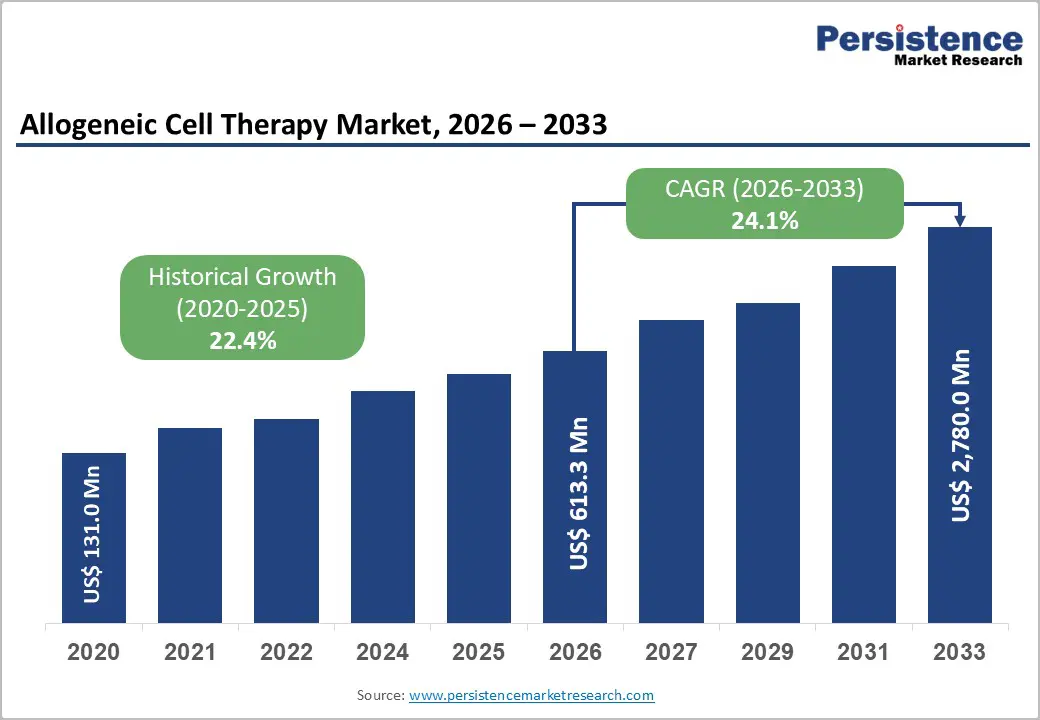
LONDON, UNITED KINGDOM, April 16, 2026 /EINPresswire.com/ -- The global allogeneic cell therapy market is set to experience significant growth, with projections indicating a rise from US$ 613.3 million in 2026 to US$ 2,780.0 million by 2033. This growth represents a robust compound annual growth rate (CAGR) of 17.2% over the forecast period, signaling a shift toward more advanced and scalable therapeutic solutions.
Download Your Free Sample & Explore Key Insights: https://www.persistencemarketresearch.com/samples/34626
Market Drivers: Advancements in Healthcare Technologies
The allogeneic cell therapy market is being propelled by multiple key factors, including the expansion of digital healthcare, telehealth, and advanced analytics. In particular, North America is expected to remain the market leader due to its advanced healthcare infrastructure, well-established biotech firms, and strong regulatory frameworks that ensure the quality and safety of therapies. Meanwhile, the Asia-Pacific region is emerging as the fastest-growing market, driven by expanding healthcare infrastructure, government-backed initiatives, and rising patient awareness.
Dominant Segment: Stem Cell Therapies
Stem cell therapies are anticipated to dominate the allogeneic cell therapy market, accounting for 76.8% of the market by 2025. These therapies are gaining traction due to their applications in tissue repair, organ regeneration, and personalized medicine. Stem cells possess the unique ability to restore damaged tissues, modulate immune responses, and integrate seamlessly with digital manufacturing solutions, enhancing the precision and efficacy of treatments.
North America Leads the Market
North America is predicted to maintain its dominance, with a 46.0% market share in 2025. This is largely attributed to its advanced clinical research infrastructure, which is further bolstered by government incentives, including the FDA’s accelerated approval pathways for regenerative medicines. The region’s leadership in the allogeneic cell therapy market is underscored by its substantial share of active cell and gene therapy trials, reflecting deep investment in early- and late-stage development.
Asia-Pacific: The Fastest-Growing Market
The Asia-Pacific region is experiencing rapid growth in the allogeneic cell therapy market. Countries such as China, Japan, South Korea, and India are heavily investing in the expansion of their healthcare and biotech sectors, which has led to an increase in advanced therapy trials. With large populations facing chronic and hematological disorders, there is a growing demand for innovative treatments, further accelerated by government initiatives and cost-effective manufacturing solutions.
Market Growth: Rising Demand for Gene and Stem Cell Therapies
The global demand for gene and stem cell therapies is rising steadily, driven by the growing clinical research landscape. Public clinical trial databases indicate a notable increase in the number of active gene and cell therapy studies, particularly those involving mesenchymal stromal cells and gene therapies, which have seen exponential growth in the last decade. This increased research activity aligns with the broader public health trends targeting chronic, genetic, and life-threatening conditions, further boosting the market for scalable allogeneic therapies.
Get Custom Insights Designed for Your Businecss: https://www.persistencemarketresearch.com/request-customization/34626
Challenges: High Cost and Manufacturing Complexity
Despite the optimistic outlook, the high cost and complex manufacturing process of allogeneic cell therapies remain significant challenges. Research and development (R&D) costs can exceed USD 1.9 billion per asset, primarily due to the complexities involved in clinical development and the high attrition rates during trials. Furthermore, manufacturing cell and gene therapies requires specialized infrastructure, adherence to strict Good Manufacturing Practices (GMP), and extensive analytical testing, which can elevate operational costs and limit production scalability in regions without established biomanufacturing ecosystems.
Market Opportunity: Expansion in Emerging Regions
Emerging regions are rapidly catching up with established biotech hubs, providing ample opportunities for growth. Countries such as China and India are not only increasing their scientific and clinical capabilities but also receiving substantial public and private funding to foster stem cell research and regenerative medicine development. These advancements create a fertile environment for expanding allogeneic cell therapy production, aligning with local scientific ecosystems and improving accessibility to clinical applications.
Hematological Disorders: The Leading Therapeutic Area
Hematological disorders represent the largest segment of the allogeneic cell therapy market due to their high prevalence and well-established treatment protocols. Allogeneic hematopoietic stem cell transplants have long been the standard of care for conditions such as leukemia, lymphoma, and bone marrow failure. The ongoing clinical trials and extensive research dedicated to these conditions highlight the efficacy and demand for allogeneic stem cell therapies in hematological treatments.
Checkout Now & Download Complete Market Report: https://www.persistencemarketresearch.com/checkout/34626
Market Segmentation
By Therapy Type
Stem Cell Therapies
Non-stem Cell Therapies
By Therapeutic Area
Hematological Disorders
Dermatological Disorders
Oncological Disorders
Neurological Disorders
Others
By End User
Hospitals
Speciality Clinics
Research Organizations
Others
By Region
North America
Europe
East Asia
South Asia & Oceania
Latin America
Middle East and Africa
Key Market Players and Strategic Developments
The competitive landscape of the allogeneic cell therapy market is marked by the presence of numerous biotech companies investing heavily in advanced cell and gene technologies. Key players are focused on optimizing manufacturing processes, enhancing therapy efficacy through AI-enabled designs, and ensuring regulatory compliance. Collaborations with academic institutions, biotech firms, and regulatory bodies are essential to drive the global adoption of allogeneic therapies.
In January 2026, ImmunityBio’s allogeneic CD19 cell therapy demonstrated durable complete responses in patients with Waldenström’s non-Hodgkin lymphoma, offering a promising outlook for future treatments in oncology.
Conclusion: A Bright Future for Allogeneic Cell Therapies
As the allogeneic cell therapy market continues to expand, opportunities are increasing across various regions and therapeutic areas. While challenges such as manufacturing complexity and high costs persist, the growing demand for innovative treatments and the rise of emerging biotech hubs position the market for robust growth. As the industry continues to innovate, advancements in gene and stem cell therapies hold significant promise for addressing unmet medical needs globally.
Read Related Reports:
Bronchial Spasm Market: The bronchial spasm market is set to grow from US$440 Mn in 2026 to US$665 Mn by 2033, driven by asthma and COPD prevalence, as well as global inhaler innovations.
Medicinal Cannabis Compounding Market: The global medicinal cannabis compounding market to grow from US$ 9.4 billion in 2026 to US$ 21.1 billion by 2033, registering a 12.5% CAGR.
Shubham Ashtul
Persistence Market Research
09158452321
email us here
Visit us on social media:
LinkedIn
Instagram
Facebook
YouTube
X
Legal Disclaimer:
EIN Presswire provides this news content "as is" without warranty of any kind. We do not accept any responsibility or liability for the accuracy, content, images, videos, licenses, completeness, legality, or reliability of the information contained in this article. If you have any complaints or copyright issues related to this article, kindly contact the author above.
