

New Couples Rehab Guide Addresses Challenges Families Face When a Spouse Struggles With Addiction
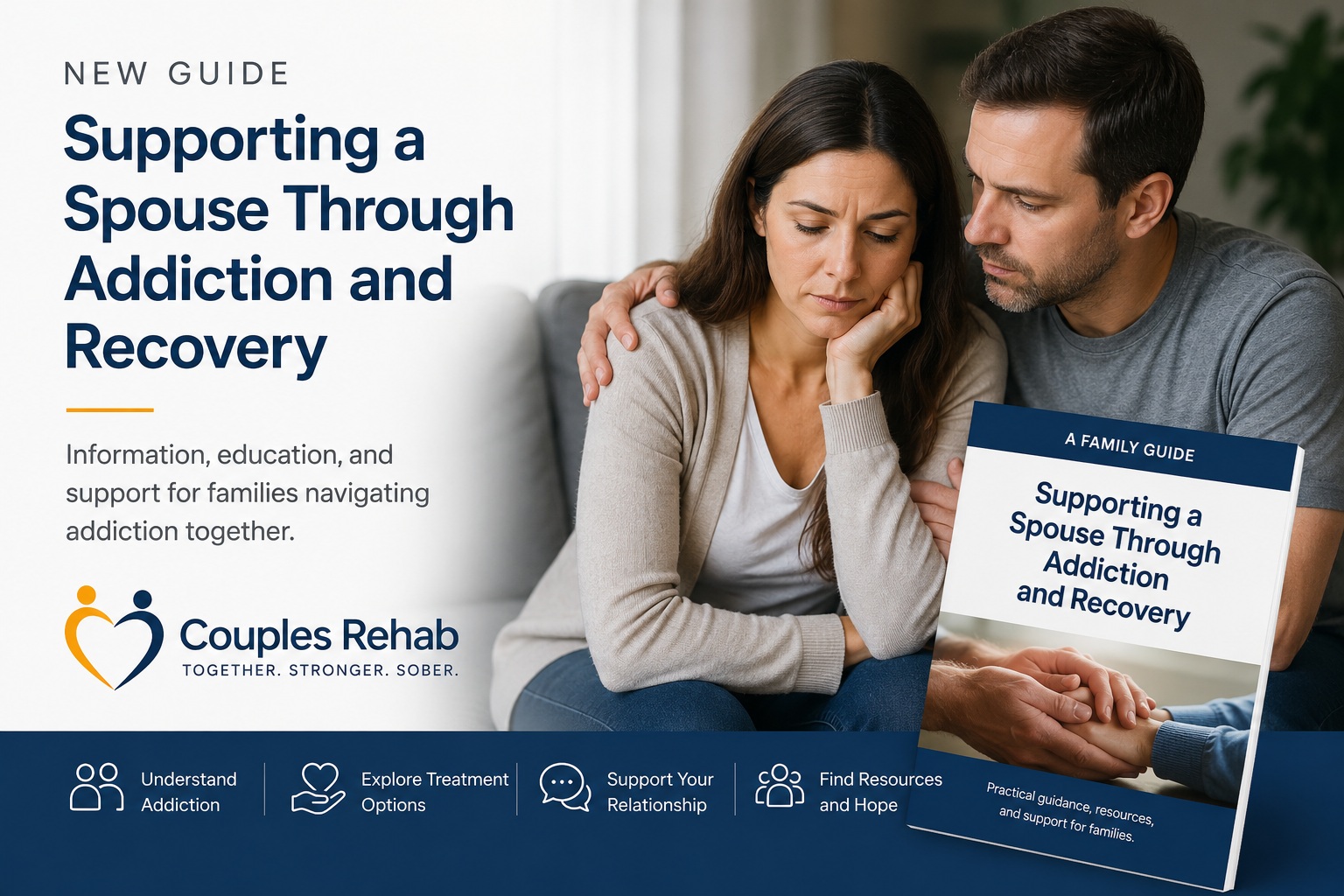
Couples Rehab releases a new educational guide designed to help families understand addiction, explore treatment options, and support a spouse through recovery.
Couples Rehab releases a new educational guide to help families navigate addiction, treatment options, and recovery when a spouse struggles with substance abuse
HUNTINGTON BEACH, CA, UNITED STATES, June 4, 2026 /EINPresswire.com/ -- Couples Rehab, a national resource dedicated to helping couples navigate addiction treatment and recovery together, has announced the release of a new educational guide designed to help families better understand the challenges that arise when one spouse is struggling with substance abuse.
The newly released resource, Supporting a Spouse Through Addiction and Recovery: A Family Guide, provides information for spouses, partners, and family members seeking practical guidance during what is often one of the most difficult periods in a relationship.
Substance use disorders continue to impact millions of families across the United States. While much of the public conversation surrounding addiction focuses on the individual experiencing the disorder, family members are frequently affected by emotional, financial, and relationship-related consequences that can significantly disrupt daily life.
According to data published by the Substance Abuse and Mental Health Services Administration (SAMHSA), millions of Americans experience substance use disorders each year, affecting not only individuals but also spouses, children, parents, and extended family members.
The new guide was developed to address common questions families often face when addiction enters a relationship.
These questions may include:
How can I help my spouse seek treatment?
What are the warning signs of a substance use disorder?
When should professional treatment be considered?
How can couples rebuild trust during recovery?
What resources are available for family members?
What should I do during a substance-related crisis?
"Family members are often searching for information during periods of uncertainty and stress," said a spokesperson for Couples Rehab. "Many spouses feel isolated and unsure where to turn for reliable information. The goal of this guide is to provide educational resources that can help families better understand addiction, treatment options, and recovery support systems."
Addiction's Impact on Relationships
Research has consistently shown that substance abuse can place significant strain on intimate relationships. Communication difficulties, financial instability, emotional distress, and trust issues frequently emerge when addiction becomes part of a household dynamic.
In many cases, spouses find themselves taking on additional responsibilities while attempting to support their loved one through increasingly complex circumstances.
Behavioral health professionals frequently emphasize that addiction should be understood as a chronic medical condition rather than a moral failing. Recognizing this distinction can help family members approach treatment discussions with greater understanding while maintaining appropriate boundaries and self-care practices.
The new Couples Rehab guide explores how addiction may affect:
Marital communication
Parenting responsibilities
Household finances
Emotional well-being
Physical health
Family stability
Long-term relationship satisfaction
The resource also outlines common behavioral warning signs that may indicate a need for professional evaluation or treatment.
Relationship experts note that substance abuse can gradually erode trust and emotional connection between partners. What may begin as occasional concerns can evolve into recurring conflict, secrecy, broken commitments, and increasing emotional distance. Over time, these challenges may affect every aspect of family life, making education and early intervention increasingly important.
Understanding Treatment Options
One of the primary objectives of the guide is to educate families about the various levels of care available for individuals and couples affected by substance use disorders.
Treatment recommendations vary depending on factors such as substance type, duration of use, co-occurring mental health conditions, medical history, and individual clinical needs.
The guide discusses several treatment pathways, including:
Medical Detoxification
For certain substances, withdrawal symptoms may require medical supervision. The guide encourages individuals to seek professional medical advice when evaluating detoxification needs.
Inpatient Rehabilitation
Residential treatment programs provide structured environments where individuals can receive clinical support, therapy, education, and recovery planning.
Outpatient Programs
Outpatient services may offer flexibility for individuals who do not require 24-hour supervision while still benefiting from counseling and treatment services.
Family and Couples Therapy
Relationship-focused counseling may help couples improve communication, establish healthy boundaries, and address issues that may have developed during active addiction.
Aftercare and Ongoing Recovery Support
Long-term recovery often includes continued counseling, support groups, recovery coaching, and community-based resources designed to promote sustained wellness.
The guide emphasizes that treatment decisions should always be made in consultation with qualified healthcare and behavioral health professionals.
In addition, the guide explains that no single treatment approach is appropriate for every individual or couple. Effective treatment planning typically involves comprehensive assessments and personalized recommendations designed to address each person's unique circumstances and recovery goals.
Addressing Common Misconceptions
The educational resource also examines several misconceptions that families may encounter.
One common misconception is that a spouse can simply "fix" or "cure" a partner's addiction through encouragement alone.
Behavioral health experts generally agree that while family support can play an important role in recovery, successful treatment often requires professional intervention, evidence-based care, and a long-term commitment to recovery practices.
Another misconception is that recovery occurs immediately after treatment completion.
In reality, recovery is often an ongoing process that may involve continued support, counseling, lifestyle changes, and relapse-prevention planning.
The guide encourages family members to focus on education, healthy communication, and realistic expectations throughout the recovery journey.
Additional misconceptions addressed include the belief that addiction only affects certain demographic groups or that seeking treatment represents a personal failure. Behavioral health professionals increasingly emphasize that substance use disorders can affect individuals from all backgrounds and that seeking professional help is often a sign of strength and commitment to recovery.
The Importance of Family Education
Research continues to demonstrate the value of family involvement in treatment and recovery planning.
Educational resources can help family members better understand addiction-related behaviors, improve communication skills, and develop healthier coping strategies.
The guide includes sections focused on:
Setting healthy boundaries
Recognizing enabling behaviors
Managing caregiver stress
Supporting treatment participation
Encouraging long-term recovery goals
Accessing community resources
Family education may also help reduce stigma surrounding substance use disorders by increasing awareness of the biological, psychological, and social factors that contribute to addiction.
Experts frequently note that informed family members are often better equipped to support recovery efforts while maintaining their own emotional well-being. Educational programs can provide valuable tools that help families navigate difficult conversations, establish realistic expectations, and build healthier relationship dynamics.
Growing Need for Accessible Information
As behavioral health concerns continue to receive increased national attention, many families are turning to online resources to better understand available treatment options.
However, the quality and reliability of online information can vary significantly.
Couples Rehab developed the new guide as part of its ongoing effort to provide educational content focused on addiction treatment, family support, relationship recovery, and behavioral health awareness.
The organization notes that family members often begin their search for help online during moments of crisis, making access to accurate information particularly important.
The guide aims to provide practical information in an accessible format while encouraging readers to seek professional assistance when appropriate.
Recent increases in online health-related searches suggest that families are actively seeking trusted information regarding addiction, mental health, and treatment resources. Providing evidence-informed educational materials can help address information gaps while encouraging individuals and families to explore professional support options when needed.
Recognizing When Professional Help May Be Needed
Families are often uncertain about when concerns regarding substance use have progressed beyond what can be managed without professional support. While every situation is unique, behavioral health professionals generally encourage individuals to seek guidance when substance use begins to interfere with important areas of life, including relationships, employment, physical health, finances, or personal safety.
Warning signs may include significant changes in behavior, repeated unsuccessful attempts to stop using substances, increasing conflict within the household, social withdrawal, declining work performance, legal difficulties, or the development of tolerance and withdrawal symptoms.
In some situations, family members may observe escalating patterns that create concerns about immediate safety. Healthcare professionals recommend seeking emergency medical assistance whenever an individual experiences signs of overdose, severe withdrawal symptoms, loss of consciousness, or other urgent medical complications.
The guide encourages families to document concerns, seek professional evaluations when appropriate, and focus conversations on support and treatment rather than blame or confrontation. Experts often note that compassionate communication combined with clear boundaries can create more productive discussions about seeking help.
Supporting Long-Term Recovery as a Family
Recovery extends far beyond the completion of a treatment program. For many individuals and families, the months and years following treatment involve rebuilding trust, establishing healthier routines, and developing strategies that support long-term wellness.
Behavioral health professionals frequently emphasize that recovery outcomes can be strengthened when family members participate in educational programs, counseling, support groups, and recovery planning efforts. These resources may help families better understand relapse prevention, communication strategies, conflict resolution, and the importance of maintaining realistic expectations throughout the recovery process.
The new Couples Rehab guide highlights the importance of viewing recovery as a long-term journey rather than a single event. By encouraging education, ongoing support, and informed decision-making, families may be better prepared to navigate challenges while celebrating progress and personal growth.
For many couples, recovery can also present opportunities to strengthen communication, improve emotional connection, and establish healthier relationship dynamics that support both individual and shared goals. While each recovery journey is different, access to accurate information and appropriate support resources can help families move forward with greater confidence and understanding.
Looking Ahead
Behavioral health professionals continue to emphasize the importance of early intervention, education, and access to evidence-based treatment resources.
While every family's experience is unique, experts generally agree that informed decision-making and professional support can play an important role in improving outcomes for individuals and families affected by substance use disorders.
The newly released guide is intended to serve as an educational starting point for families seeking to better understand addiction, recovery, and available support resources.
As awareness surrounding behavioral health continues to grow, organizations across the healthcare and recovery sectors are increasingly focused on improving access to reliable educational information. Couples Rehab believes that informed families are better positioned to make decisions that support both individual well-being and healthier relationships.
About Couples Rehab
Couples Rehab is an informational resource focused on addiction treatment education, relationship recovery, and behavioral health awareness. Through educational content, treatment information, and recovery resources, Couples Rehab seeks to help individuals, couples, and families better understand the challenges associated with substance use disorders and the pathways available for recovery support.
For additional information about the educational guide and available resources, visit CouplesRehab.com.
Mason Baxter
Couples Rehab
+1 888-500-2110
email us here
Legal Disclaimer:
EIN Presswire provides this news content "as is" without warranty of any kind. We do not accept any responsibility or liability for the accuracy, content, images, videos, licenses, completeness, legality, or reliability of the information contained in this article. If you have any complaints or copyright issues related to this article, kindly contact the author above.
