

David H. Holtzman Warns Enterprises to Prepare for ‘Q-Day’ at the CAIO Connect Podcast with Sanjay Puri

CAIO Connect Podcast
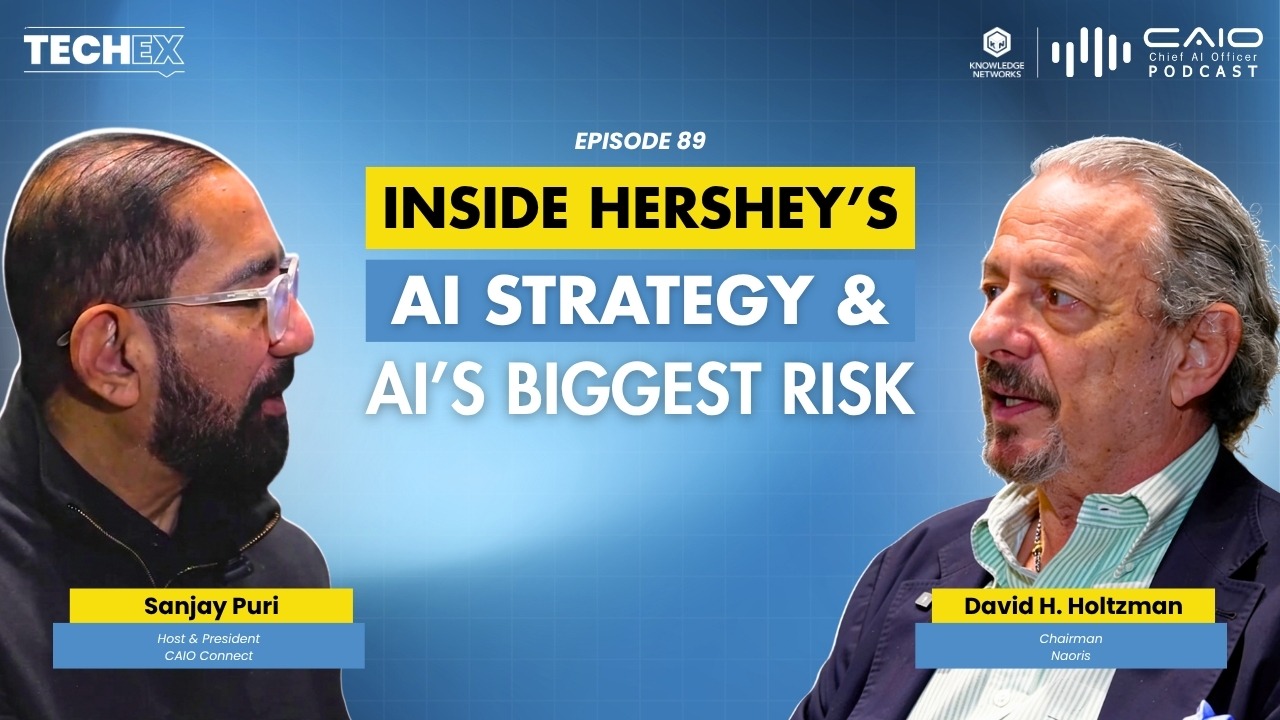
David H. Holtzaman, Chairman of Naoris with Sanjay Puri, President of CAIO Connect
On the CAIO Connect Podcast, David H. Holtzman warned that “Q-Day” could break modern encryption, urging enterprises to prepare now with quantum-safe security.
Introducing his background, Holtzman highlighted a career spanning leadership roles as chief scientist at IBM, head of research at Booz Allen, and CTO of Network Solutions, where he helped manage critical internet infrastructure during the Y2K era. Drawing parallels between Y2K and the quantum transition, Holtzman noted that while Y2K prompted widespread concern and preparation, the quantum threat could be far more severe. According to him, the majority of the world's sensitive data, including banking transactions, military communications, corporate secrets, and even cryptocurrencies, relies on encryption methods that future quantum computers could potentially crack.
A major concern discussed on the podcast was the growing phenomenon known as “harvest now, decrypt later.” Holtzman explained that governments, intelligence agencies, and sophisticated threat actors are already collecting encrypted data today with the expectation that future quantum systems will allow them to decrypt it. This means that information considered secure today could become exposed years later. He warned that organizations delaying preparation are effectively increasing their future vulnerability every day. For chief AI officers, CIOs, and CISOs, he argued, quantum readiness should rank among the top strategic risks despite appearing to be several years away.
The discussion also explored the intersection of AI and cybersecurity. Holtzman noted that many AI systems themselves rely heavily on encryption for securing models, communications, and autonomous devices. If encryption standards fail, AI-powered systems could become vulnerable as well. Referencing Anthropic’s cybersecurity-focused AI tool Mythos, Holtzman said recent advances in large language models have demonstrated impressive capabilities for identifying vulnerabilities across complex digital environments. He suggested that enterprises could soon leverage AI systems to map their networks and identify encryption weaknesses before quantum attackers do. According to Holtzman, feeding enterprise network topologies into advanced AI models could reveal hidden security gaps that many organizations are currently unaware of.
When asked whether only critical infrastructure operators should be concerned, Holtzman delivered a broader warning. Every organization, regardless of size or industry, depends on digital systems for operations, revenue, and shareholder value. Unlike traditional cyberattacks that required significant human effort, future attacks could be highly automated through AI-driven systems. He pointed to the rise of AI-powered spear-phishing campaigns as evidence that automation is already reshaping the threat landscape. As a result, he believes both large enterprises and smaller businesses face significant exposure if they fail to modernize their security architectures.
Talent shortages emerged as another key theme during the conversation. Holtzman compared today's challenge to the Y2K era, when companies struggled to find programmers skilled in legacy languages such as COBOL. In the quantum era, however, he believes software and automation can help close the expertise gap. Rather than relying solely on expensive cybersecurity specialists, organizations can adopt quantum-resistant technologies and AI-powered security tools to automate much of the protection process. Holtzman emphasized that governments have already identified cryptographic algorithms considered resistant to quantum attacks, giving enterprises a roadmap for future-proofing their systems.
Closing the discussion, Holtzman urged business leaders not to wait until quantum computing becomes an immediate threat. On the CAIO Connect Podcast, hosted by Sanjay Puri at TechEx, he delivered a clear message: organizations that begin auditing encryption use, adopting quantum-resistant solutions, and leveraging AI-driven security automation today will be far better positioned when Q-Day eventually arrives. For enterprises navigating the rapidly evolving worlds of AI and cybersecurity, preparation may prove to be the most valuable investment of all.
Upasana Das
Knowledge Networks
email us here
Visit us on social media:
LinkedIn
Instagram
Facebook
YouTube
X
Legal Disclaimer:
EIN Presswire provides this news content "as is" without warranty of any kind. We do not accept any responsibility or liability for the accuracy, content, images, videos, licenses, completeness, legality, or reliability of the information contained in this article. If you have any complaints or copyright issues related to this article, kindly contact the author above.
